


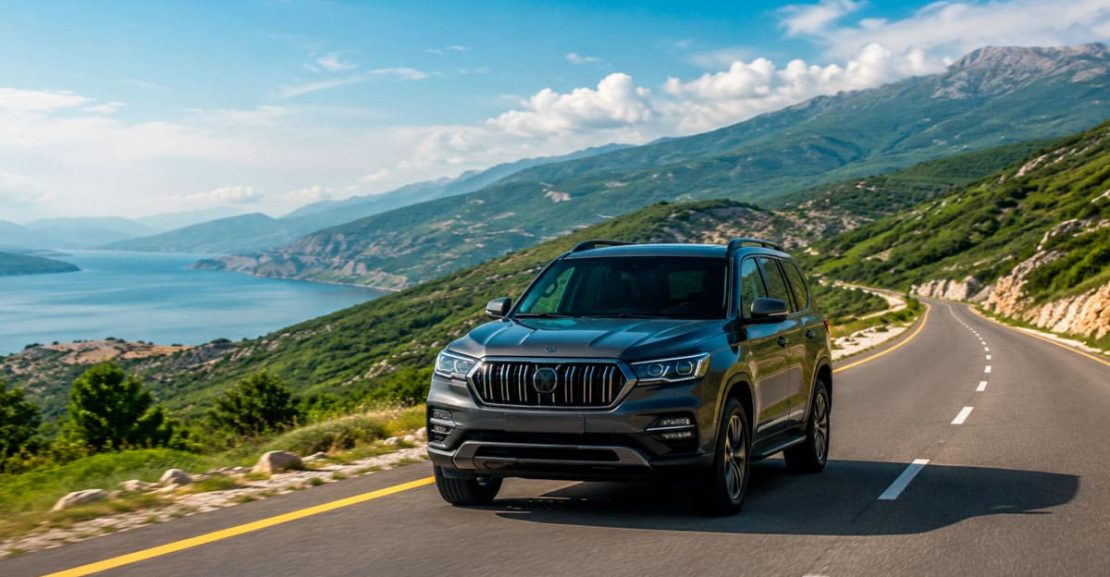
Leaving Baku on Friday afternoon or early Saturday morning gives you enough time to reach mountain villages, forests, lakes, and coastal destinations without spending most of the weekend on the road. Within a two-hour drive, the landscape shifts from the Absheron Peninsula to rolling hills and the foothills of the Greater Caucasus. Most routes follow modern highways before branching onto quieter regional roads, while a few continue onto mountain passes or unpaved tracks. Planning fuel stops and downloading offline maps before departure will make the journey much easier.
Essential Logistics for Drivers in Azerbaijan
A little preparation goes a long way once you leave Baku, especially if your route heads into the mountains.
- Speed cameras are common along the M1, M2, and M4 highways. Posted speed limits are generally 110 km/h on motorways, 90 km/h outside towns, and 60 km/h in urban areas.
- Police checkpoints regularly appear near district borders. Keep your driving licence, vehicle registration, and identification readily available.
- A standard passenger car is suitable for most destinations in this guide, while the upper Shahdag area, Lahij after heavy rain, and the access tracks to Gobustan’s mud volcanoes are better suited to vehicles with higher ground clearance.
- Fuel stations become less common once you leave the main highways, so it’s worth filling up before entering remote or mountainous areas.
- Download Google Maps or Maps.me for offline navigation, as mobile coverage can become unreliable in valleys and higher elevations.
- Mountain weather can change quickly. Fog, rain, and low cloud sometimes reduce visibility, even during summer.
Top Driving Routes for a Two-Day Getaway
1. Heading North to Quba’s High-Altitude Villages
The journey covers around 170 km from central Baku and usually takes 2.5–3 hours via the M1 highway. The road is fully paved with good-quality asphalt, although traffic around Sumgayit can slow progress on Friday evenings and Saturday mornings.
Continue beyond Quba to reach quieter mountain communities where the scenery changes quickly. Good stopping points include Qecresh Forest, Tengealti Canyon, and Afurja Waterfall. The final kilometres include several tight bends, but the route remains comfortable for a standard passenger car in dry weather.
2. Alpine Driving and Resorts in the Shahdag Area
Reaching Azerbaijan’s largest mountain resort requires approximately 215 km of driving and around 3–3.5 hours on the road. Most of the route follows wide, well-maintained highways before climbing steadily into the Greater Caucasus.
The drive passes through Qusar before reaching Shahdag Mountain Resort and can easily be extended to Laza Village, where waterfalls and steep cliffs surround the valley. The ascent includes long gradients and sweeping curves rather than difficult switchbacks. Temperatures are often noticeably lower than in Baku, and winter conditions may require additional caution.
3. Navigating the Steep Switchbacks to Historical Lahij
Covering roughly 190 km, this drive typically takes between 3.5 and 4 hours. The first section follows modern highways before turning onto one of Azerbaijan’s most rewarding mountain roads.
The approach passes through Girdimanchay Gorge, crosses the Lahij Suspension Bridge, and finishes in Lahij’s historic cobbled quarter. The final climb includes steep switchbacks, narrow lanes, and limited overtaking opportunities. A standard sedan handles the route well in dry weather, while an SUV provides extra confidence after prolonged rainfall. Loose gravel and occasional small rockfalls may appear following heavy rain.
4. Shifting Landscapes Along the Route to Gabala Lakes
Expect a drive of approximately 220 km that takes around 3.5 hours under normal traffic conditions. Wide highways gradually give way to quieter regional roads surrounded by forests and mountain scenery.
Useful stops include Nohur Lake, Yeddi Gozel Waterfall, and the Tufandag Mountain Resort area. The road remains paved throughout the journey, although the final approach to the waterfall becomes narrower and considerably busier on weekends. Parking is usually easy to find outside public holidays.
5. The Long Drive West to Sheki’s Architectural Sites
Driving to Sheki covers approximately 310 km and normally requires between 4.5 and 5 hours. Most of the route follows the M4 highway, allowing steady progress before entering smaller regional roads closer to the city.
Plan time for three key stops: Sheki Khan’s Palace, the Upper Caravanserai, and Kish Village, located a short drive north of the historic centre. Speed limits reduce when passing through villages, so the final part of the journey takes longer than the map may suggest. An overnight stay allows enough time to explore the city without rushing.
6. Wine Country Roads and Mountain Passes of Shamakhi
The drive to Shamakhi covers approximately 125 km and usually takes around 2 hours from central Baku. The route follows a well-maintained highway before gradually climbing into higher elevations, where vineyards and rolling hills replace the open plains.
Three worthwhile stops include Meysari Winery, the Juma Mosque, and the Shamakhi Astrophysical Observatory. The road remains paved throughout the journey, with several long climbs and descents. Strong crosswinds are common on exposed sections of the plateau, particularly during autumn and winter.
7. Off-Roading to the Mud Volcanoes Around Gobustan
Located about 75 km from central Baku, the mud volcanoes can be reached in approximately 1.5 hours. The first part of the journey follows smooth asphalt before turning onto rough dirt tracks leading to the volcanic field.
Useful navigation points include Gobustan National Reserve, Dashgil Mud Volcano, and the main mud volcano field. Deep ruts, loose gravel, and soft sand make the final section challenging for low-clearance vehicles, especially after rainfall. A high-clearance SUV or 4WD is the safest option if road conditions are poor.
8. Forested Coastal Tracks Near the Northern Border in Nabran
The journey to Nabran is approximately 200 km and usually takes around 3 hours. Most of the drive follows the M1 highway before branching onto quieter regional roads that lead through coastal forests near the Caspian Sea.
Recommended stops include Nabran Beach, Samur Forest, and the Khachmaz coastal recreation area. Traffic is generally light outside the summer season, and the final roads are easy to follow thanks to clear signage and well-maintained asphalt.
9. The Highway Journey to Ganja and Goygol National Park
Driving to western Azerbaijan covers approximately 360 km and takes about 5–5.5 hours. Nearly the entire journey follows modern highways with frequent fuel stations and reliable road conditions.
After reaching Ganja, continue towards Lake Goygol, the Maralgol viewpoint, and the entrance to Goygol National Park. Temperatures usually become noticeably cooler inside the park, while the final kilometres include steeper gradients and tighter bends than the highway.
10. Rural Backroads and Cultural Contrast in Ivanovka
Ivanovka lies around 190 km from Baku, with a typical driving time of approximately 3 hours. The journey follows good regional highways before narrowing through agricultural landscapes in the Ismayilli district.
Visit Ivanovka Village, one of Azerbaijan’s best-known rural communities with a long history of collective farming, then continue through the surrounding Ismayilli countryside and nearby viewpoints overlooking the valley. Traffic remains light throughout most of the route, making it an enjoyable alternative to Azerbaijan’s busier tourist destinations.
Smart Route Combinations for a 48-Hour Loop
If you’d like to visit more than one destination without wasting time retracing your route, these combinations make practical use of Azerbaijan’s road network.
- Northeastern Mountain Circuit: Baku → Quba → Shahdag → Laza → Baku. A great choice for alpine scenery, mountain villages, and well-maintained roads.
- Central Highlands Loop: Baku → Shamakhi → Lahij → Gabala → Baku. Combines historic settlements, winding mountain roads, forests, and lakes into one continuous journey.
- Western Heritage Drive: Baku → Sheki → Ganja → Goygol National Park → Baku. Best suited for a full two-day trip with an overnight stay.
Which Route Will You Choose for This Weekend?
A single weekend is enough to experience mountain roads, coastal scenery, forest landscapes, historic villages, and national parks without travelling far from Baku. Every destination offers a different driving experience, whether you prefer smooth highways, winding mountain passes, quiet rural roads, or short off-road adventures. Checking the weather forecast before departure and planning fuel stops in advance will help you make the most of your trip.
Which destination will you explore first? Share your latest road conditions, favourite roadside café, or useful driving tip in the comments to help other travellers plan their next weekend escape.